
Ecommerce development guide
A complete guide to ecommerce development with FuturByte
What a UAE retailer or brand should know before building an online store: platforms, catalogues, payments, delivery, integrations, launch and the work that keeps sales growing afterwards.
What ecommerce development covers
Ecommerce development is the work of building an online store that lets customers find products, decide with confidence, pay securely and receive their orders without trouble. It covers the storefront people see, the catalogue and content behind it, the checkout and payment flow, and the connections to stock, fulfilment, accounting and marketing systems that keep the business running.
At FuturByte, we build stores as sales channels rather than websites with a basket attached. Every decision, from how categories are structured to how delivery options are displayed, is judged by whether it helps customers buy and helps your team fulfil orders efficiently. This guide explains how we plan, build and launch stores, and how we keep improving them once orders start arriving.
Who we build stores for
Our ecommerce clients include retailers moving from physical shops to online sales, direct to consumer brands selling their own products, distributors opening business to business ordering portals and marketplaces connecting several sellers. We work across fashion, beauty, electronics, home goods, food, health products, furniture and specialist equipment.
Some clients are launching a first store and need advice on every decision. Others run an established store that has become slow, hard to manage or unable to cope with growth. Both situations start with understanding the products, the customers, the order volumes and the operational realities that the store must support every day. A store that looks impressive but creates extra manual work for the warehouse is not a success.
Planning the store
Every project begins with discovery. We review your product range, customer types, current sales channels, fulfilment model and the systems already in place. We look at how competitors present similar products and where customers in the UAE expect particular features, such as cash on delivery, Arabic language support or same day delivery options.
Discovery produces a clear plan: the platform recommendation, category structure, product data requirements, key customer journeys, required integrations and a defined scope for the first release. It also identifies risks early, such as incomplete product data, payment approvals that take time or warehouse processes that will need adjusting before launch. Settling these points at the start keeps the build predictable and avoids last minute surprises.
Choosing the right platform
There is no single platform that suits every store. Shopify works well for brands that want a reliable, hosted store with a large app ecosystem and minimal technical maintenance. WooCommerce suits businesses already running WordPress that want flexibility and full control of their hosting. Magento fits larger catalogues and complex requirements such as multiple stores, currencies or customer groups.
For unusual business models, high volumes or very specific checkout needs, we build custom or headless stores, where the storefront is separated from the commerce engine for speed and flexibility. We explain the trade offs in ongoing costs, control, performance and maintenance in plain language, and recommend the option that fits your plans for the next few years.
Catalogue structure and product data
A well organised catalogue makes products easy to find and easy to manage. We design category hierarchies, filters and attributes around how customers actually shop, whether by size, colour, brand, compatibility, occasion or price band. Good filtering is especially important for stores with large ranges.
Product data is often the hardest part of a launch. We define the fields each product needs, including titles, descriptions, specifications, variants, images and translations, and we build import processes for bulk uploads from spreadsheets or supplier feeds. Clean, consistent data improves search results, filters, marketplace feeds and the customer experience at the same time. We can also help write or improve product descriptions where existing content is thin.
Product pages that answer questions
Product pages carry most of the burden of persuasion online, because customers cannot touch or try the item. We design pages with clear images that can be zoomed, concise descriptions, full specifications, size guides, stock status, delivery estimates and returns information placed where customers look for them.
Reviews, ratings and answers to common questions add confidence, and we integrate review tools that collect feedback after delivery. For products that need explanation, we support video, comparison tables and related accessories. Every element is designed to answer the questions that would otherwise send a customer to a competitor or leave them undecided.
Checkout and payments
The checkout is where most stores lose sales, so we keep it short, clear and reassuring. Guest checkout, address fields that suit UAE locations, transparent delivery charges and visible security reassurance all reduce abandonment. We test the flow carefully on mobile, where most purchases begin.
We integrate payment gateways commonly used in the region, such as Stripe, Checkout.com, Telr and Network International, alongside Apple Pay, Google Pay, buy now pay later services such as Tabby and Tamara, and cash on delivery where it suits your customers. Payment setup is tested end to end, including refunds and failed payment scenarios.
Delivery, fulfilment and returns
Online customers in the UAE expect fast, predictable delivery and clear tracking. We connect stores to courier and fulfilment providers so shipping rates, delivery windows and tracking information appear automatically, and orders flow to your warehouse or third party logistics provider without manual copying.
Returns are part of the experience, not an afterthought. We build clear return policies into the store and set up processes for customers to request returns or exchanges easily. Smooth returns build trust and repeat purchases, and good systems behind them save your customer service team a great deal of time. Clear status updates by email or WhatsApp also reduce the number of customers asking where their order is.
Selling in English and Arabic
Many UAE stores need to serve customers in both English and Arabic. We build bilingual stores with right to left layouts designed properly for Arabic, translated product content, localised checkout fields and language switching that keeps customers on the same product or category page.
We also handle the practical details that make a bilingual store work, including Arabic search that understands spelling variations, correctly formatted prices and dates, and email notifications in the customer's chosen language. For brands selling across the GCC, we can configure multiple currencies, tax settings and delivery zones for each country, all managed from a single administration area.
Integrations that run the business
An online store rarely works alone. We connect stores to ERP and inventory systems so stock levels and prices stay accurate across channels, to accounting software for order and tax records, and to CRM platforms so customer data supports marketing and service.
We also integrate marketplaces such as Amazon and Noon where you sell through several channels, along with email marketing platforms, loyalty programmes, review tools and WhatsApp Business for order updates and customer support. Each integration is tested with real scenarios and documented so your team understands how data moves between systems.
Speed, search and discoverability
Slow stores lose sales, particularly on mobile connections. We build with optimised images, efficient code, caching and content delivery networks, and we test key pages against Core Web Vitals before launch. Category and product pages receive particular attention, since they handle most of the traffic.
Search foundations are built in from the start, with clean product URLs, structured data for products and reviews, editable titles and descriptions, XML sitemaps and canonical tags that prevent duplicate content from filters and variants. When replacing an older store, we map old addresses to new ones so existing rankings and links carry over.
Security and compliance
Customers trust a store with their personal and payment details, so security is treated as a core requirement. We use secure connections throughout, rely on payment providers to handle card data so it never touches your servers, keep platforms and extensions updated and protect administration areas with strong authentication.
We help you present clear privacy policies, terms and returns information, and we set up consent for cookies and marketing communications where required. We recommend checking final legal wording with your adviser, particularly for VAT display, consumer rights and data protection obligations in each country where you sell.
Testing and launch
We build in stages and review working parts of the store with you as we go. Before launch we test every key journey across devices and browsers, place real test orders through each payment method and delivery option, and confirm that orders, stock updates and emails behave correctly in connected systems.
Launch follows a written plan covering final product data checks, redirects, domain changes, analytics verification and payment switchover to live mode. We monitor the store closely in its first days, watching errors, speed and order flow, so any issue is caught and resolved before it affects many customers. We also agree a support window for the launch period, so your team knows exactly who to contact.
Measuring store performance
Before the build begins we agree how success will be measured. Typical measures include conversion rate, average order value, revenue per visitor, basket abandonment, repeat purchase rate and the share of orders completed without customer service involvement.
We set up ecommerce analytics and conversion tracking for Google Analytics, Google Ads, Meta and other channels, so every sale can be traced to its source. Dashboards show which products, categories and campaigns perform best and where customers drop away, giving your team clear evidence for merchandising and marketing decisions, not guesswork.
Growing after launch
A store improves with real customer behaviour. After launch we review analytics, search terms, recordings and customer feedback to find where shoppers hesitate, which products need better content and which features would make the biggest difference next.
Many clients continue with us on ongoing development, conversion optimisation, ecommerce SEO and paid campaigns. Our maintenance service covers platform and extension updates, security patches, backups, uptime monitoring and small improvements, so the store stays fast, secure and ready for seasonal peaks such as Ramadan, White Friday and year end sales.
What you receive
At handover you receive a fully working store with your catalogue loaded, payments and delivery configured, integrations tested and tracking verified. You also receive administrator accounts with appropriate roles for your team, and documentation covering how the store and its integrations are set up.
We run training sessions so your team can add products, manage orders, create promotions, update content and handle returns confidently. Source code and configuration are documented and kept in version control, so the store is easy to maintain and extend, whether we continue supporting it or your team takes it in house.
How to prepare for a first conversation
It helps to share your product range and approximate number of items, current sales channels, expected order volumes, fulfilment arrangements, preferred payment methods and the systems you already use. Examples of stores you admire and a target launch window are useful too. If you already run a store, access to its analytics helps us see what to keep and what to fix.
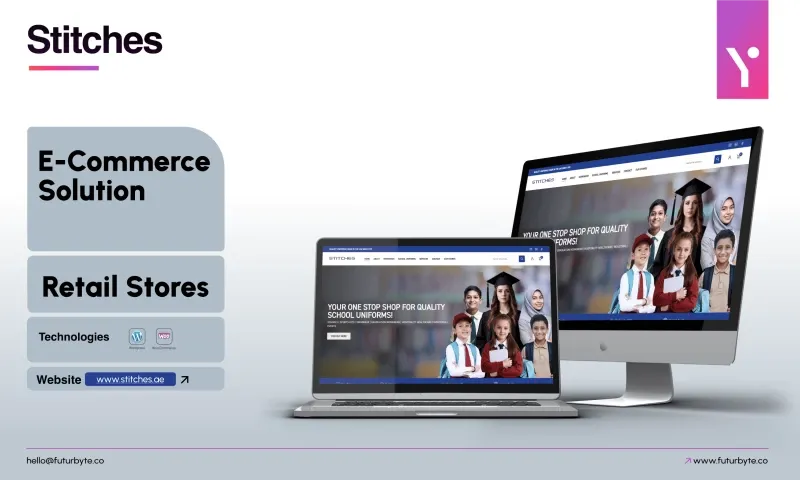
From there we will ask questions, suggest a platform and a sensible scope for the first release, and explain how we would run the project. Our clients rate us 4.9 from 23 reviews on Clutch, and the work on this page shows the stores and products we build. When you are ready, send us a message and tell us what you sell.

 4.9